
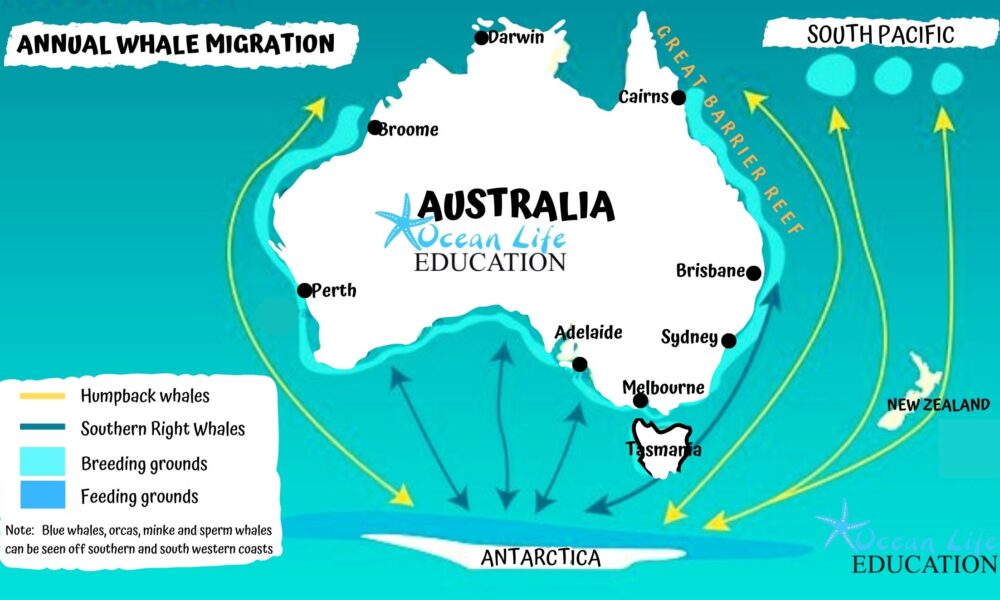
Explore our collection of free and paid humpback whale resources for teachers, students and ocean educators. Discover Australian humpback whale facts, migration activities, worksheets, videos, classroom activities and curriculum-aligned marine science resources designed for schools, enthusiasts, and homeschool learning.
Discover engaging online marine science courses focused on Australia’s incredible humpback whales. Perfect for schools, homeschoolers, educators, and whale enthusiasts. Our interactive programs are designed for students aged 7+ and combine videos, hands-on activities, and real-world ocean science to inspire learning.
Aligned with the Australian Curriculum, these courses support key learning areas including Biological Sciences, Geography, and Sustainability. Students explore humpback whale habitats, migration, adaptations, classification, life cycles, and the impact humans have on marine ecosystems.
Flexible and easy to use, our online whale courses are ideal for classroom learning or home education. They can also be combined with our live marine incursions and coastal excursions for an unforgettable hands-on learning experience.
Book a Humpback Whale focused incursion at your school, centre or event.
Each year, more than 20,000 humpback whales travel along Australia’s east coast in one of the longest mammal migrations on Earth. After feeding during summer on up to four tonnes of krill in the cold Antarctic waters, they migrate north to the warmer tropical waters of the Coral Sea and Great Barrier Reef to mate and give birth.
This remarkable round trip can reach 10,000 kilometres, and lucky Australians can witness the migration from beaches and headlands along the east coast.
Humpback whales often travel alone or in small groups called pods, although they may gather in larger groups while feeding.
During migration, whales often travel in this order:
Scientists believe mothers remain longer in Antarctic feeding grounds to build energy reserves and produce milk for their calves.
Humpback whales are famous for their spectacular acrobatics. They leap from the water in a behaviour called breaching, or slap the surface with their fins and tails.
These behaviours may help whales:
Male humpback whales produce complex songs by moving air through chambers in their heads. These sounds are amplified through fatty tissue in the jaw and may help with communication, mating, or locating food.
A humpback whale song can travel up to 30 kilometres underwater.
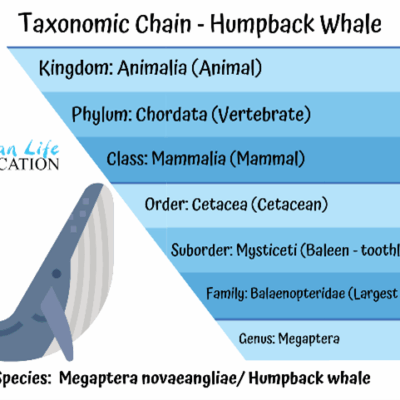
LINK TO FREE RESOURCES. In this blog, we look at how to use humpback whales to support curriculum-aligned learning for primary students, with a focus on humpback whale classification, adaptations, and marine ecosystems and habitats.
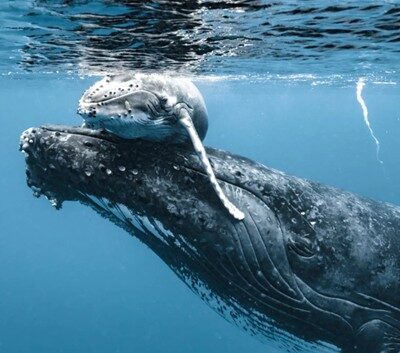
LINK TO FREE RESOURCES. This blog offers educators valuable information about humpback whale life cycles, habitats, and threats, along with engaging discussion points and activities that can be brought to life with a trip to the coast to view the spectacle that is the annual humpback migration.
Find out when and where to see the annual humpback migration on East Coast Australia
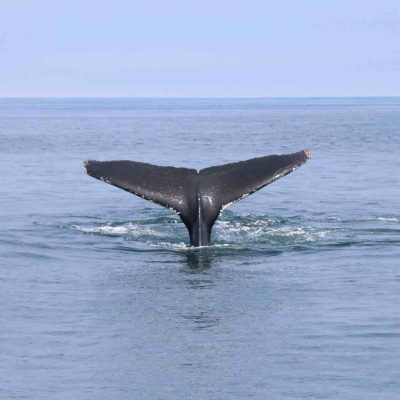
When and where to watch the humpbacks in Queensland.
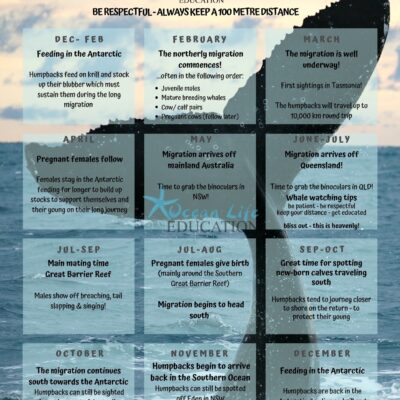
Free calendar so that you don’t miss out on the greatest show on earth!!
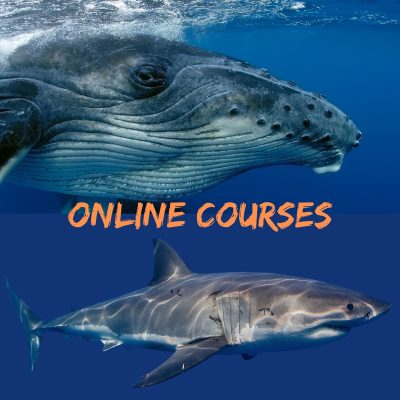
Get the lowdown on Australia’s iconic humpback whales with this engaging, curriculum-aligned online course designed for learners aged 7+. Packed with awesome videos, infographics, migration maps, a whale-watching guide, quizzes, and interactive activities, this course brings marine science to life in a fun and accessible way.
Students will explore key concepts including migration, habitats, adaptations, and conservation, while building their understanding of real-world ocean ecosystems.
Perfect for classrooms, homeschooling, or independent learners, this course can be used on its own or alongside Ocean Life Education’s incursions and excursions for a richer, hands-on experience.
Cost: $20
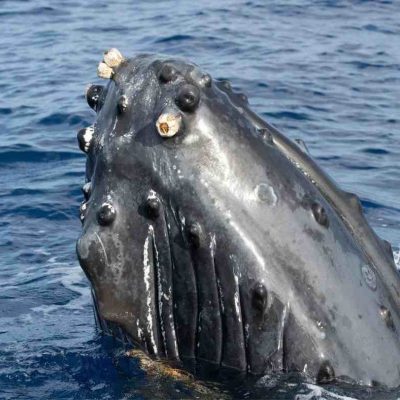
Our Humpback Whale resources support the teaching of key curriculum themes – Human Impact, Habitats, Adaptation, and Classification – through the engaging context of this iconic species.
The resource pack includes a wide range of materials to support classroom learning:
Cost: $20