


Humpback whales are one of Australia’s most iconic ocean visitors – and perfect for helping students explore how animals adapt to survive in their environments. With their incredible annual migration along Australia’s coasts, unique feeding behaviours and specialised physical features, humpbacks offer rich, hands-on learning opportunities that support the Australian Curriculum’s focus on biological sciences and understanding how living things adapt, grow and survive.
Below is a guide to humpback whale adaptations, plus simple, engaging activities that you can run in the classroom to bring ocean science to life.
Check out our educational programs that support this curriculum learning.
Humpback Whale Fast Facts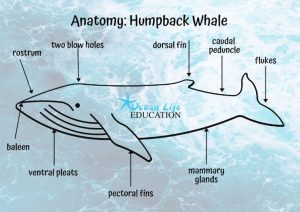
- Species of baleen whale
- Gets its name from the hump on its’ back
- Distinctive shape – long pectoral fins and a knobbly head
- Black on the upper (dorsal) side and black and white on the under (ventral) side
- Ventral pleats run from the tip of the lower jaw to the belly
- Dorsal fin on the back for stability
- The shape and colour on the dorsal (upper) fin and tail is unique to each whale, like human fingerprints
Why Humpback Whales Are a Powerful Adaptation Example
Each year, humpback whales travel up to 10,000 km along Australia’s east coast – one of the longest migrations on the planet. Their journey from Antarctica to Queensland and back again highlights how animals rely on physical and behavioural adaptations to thrive in different environments.
Studying humpback whales helps learners develop:
🐋An understanding of how animals adapt to survive
🐋Observation and comparison skills
🐋Curiosity about marine ecosystems
🐋Awareness of ocean conservation and human impact
Key Humpback Whale Adaptations
-
Blubber – A Built-In Heater
Humpbacks have a thick layer of blubber that keeps them warm in freezing Antarctic waters. It also provides energy when they stop feeding in warmer waters during migration.
Try it:
Blubber Glove Experiment – Students place a hand inside a bag surrounded by fat to feel how insulation works.
-
Baleen Plates – The Ultimate Filter-Feeder
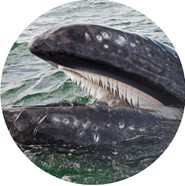
Humpbacks are baleen whales, meaning they feed by filtering tiny shrimp-like creatures through fringed plates of long, fingernail-like material called baleen, attached to their upper jaws.
Try it:
Baleen Sieve Activity – Use a comb or colander with water and small floating items (e.g., lentils or bits of paper) to mimic how baleen traps food.
-
Flippers and Flukes – Built for Swimming
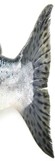
Humpbacks have long pectoral fins – the largest of any whale – which help with turning, gliding and acrobatic manoeuvres.
The tail has two lobes known as flukes . Whales tails are horizontal and move up and down, unlike a fish’s tail (shown) which is vertical and moves from side to side.
Try it:
Flipper Paper Plane Challenge – Make paper “whales” with long and short fins and compare which glides further.
-
Migration Behaviour – A Survival Strategy
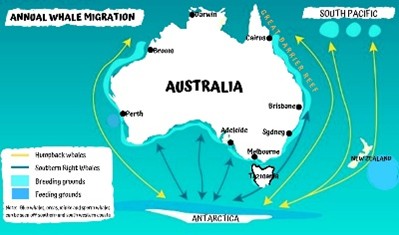
Travelling thousands of kilometres ensures humpbacks can feed in Antarctica and breed in warm northern waters.
Try it:
Migration Map Tracking – Plot their journey on a large classroom map, noting resting spots, danger zones and feeding grounds. Bring it to life with a local focus.
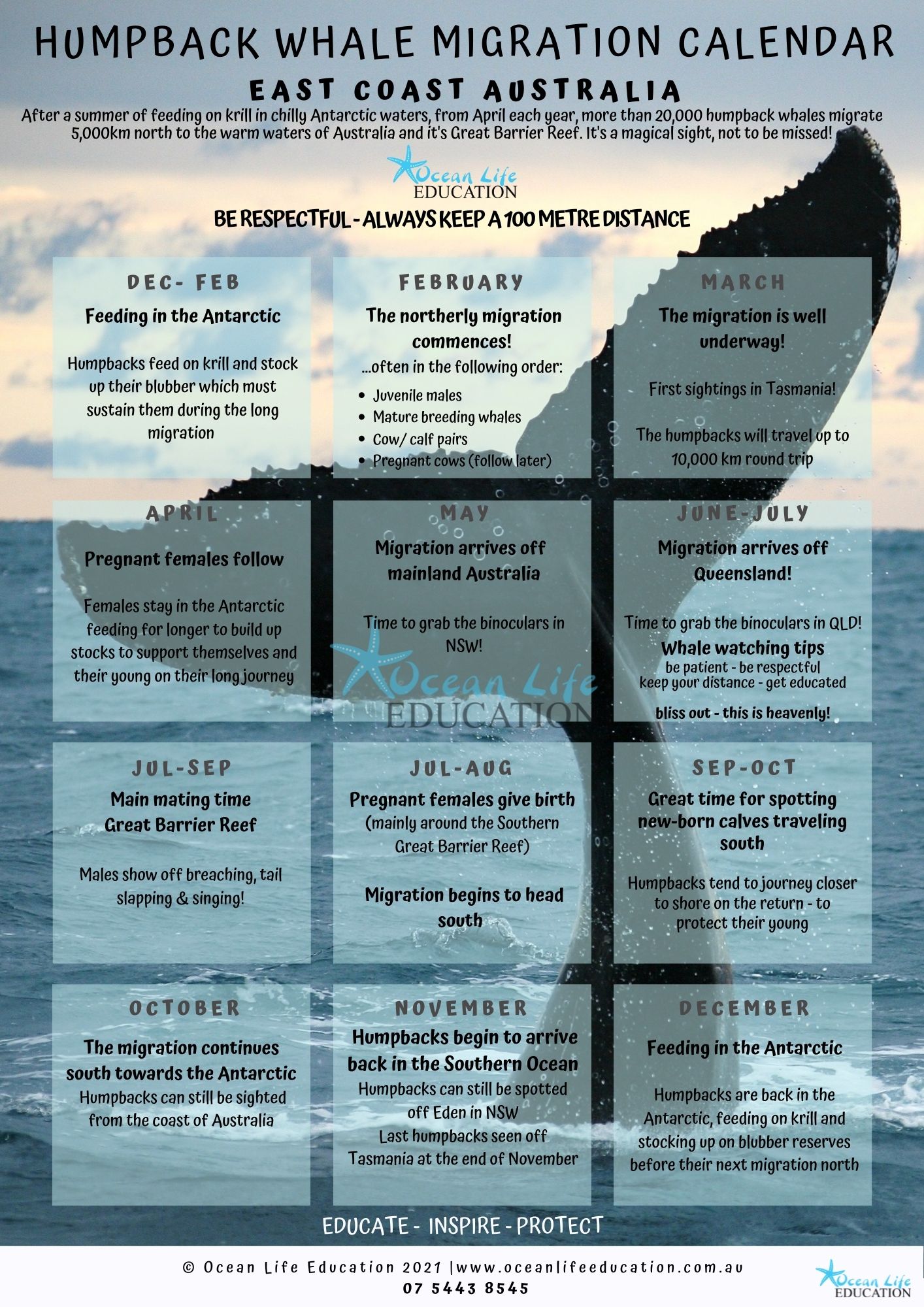
Humpback Whale Migration Calendar
Where to see the Humpback Whales Migration on East Coast Australia
-
Songs and Communication – Finding Each Other in the Deep
Male humpbacks sing complex songs that travel long distances underwater, helping them communicate during migration.
Try it:
Sound Wave Demo – Use tuning forks, water bowls or elastic bands to explore how sound travels differently through solids, liquids and air.
Wrap-Up: Bringing Science and the Ocean Together
Adaptation activities centred on humpback whales not only support learning in biological sciences but also build curiosity, empathy and environmental awareness. By exploring how these amazing animals survive and thrive, students gain a deeper appreciation of Australia’s ocean ecosystems – and the role humans play in protecting them.
If you’d like more hands-on ocean learning experiences, Ocean Life Education offers curriculum-aligned programs designed to inspire and engage.
Learn More About Humpback Whales with our online course
🧭 Local Learning Experiences
Take advantage of the humpback whale migration along the East Coast of Australia. From May to November, students may be able to see whales from shore or on a local eco-tour.
Consider planning:
🐳 A virtual whale-watching tour
🐳 An incursion with Ocean Life Education
🐳 A field trip/ excursion to a local coastal lookout
About Ocean Life Education 
📚 Recommended Resources & Useful Links
Primary Incursions & Excursions
Primary Resources & Activities
Ocean Life Education’s Whale Resources
For more information about what we do, check out Ocean Life Education.
We hoped you enjoyed reading our blog: Humpback Whale Adaptations: Fun Learning Activities for Schools
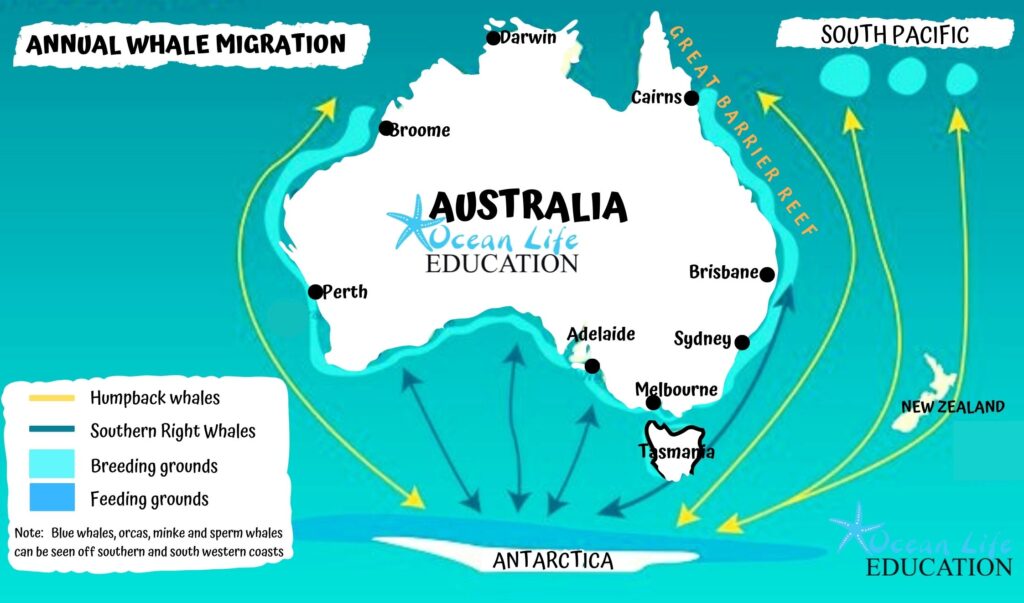
 The exact timing varies depending on the temperature of the water, among other factors, but generally the best time to see humpback whales on the East Coast is between May and November each year.
 The best places to see humpback whales in Queensland are considered to be the Sunshine Coast, The Great Barrer Reef, and Hervey Bay.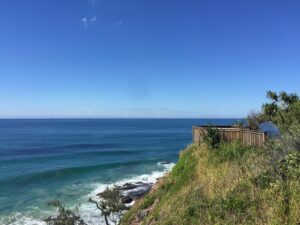
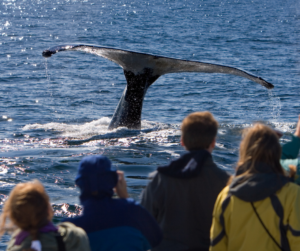 If you wish to do a whale watching tour in Queensland, you could find the whales swimming under your boat. It’s really not uncommon as whales can be very inquisitive!