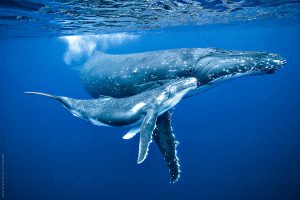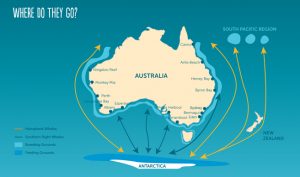



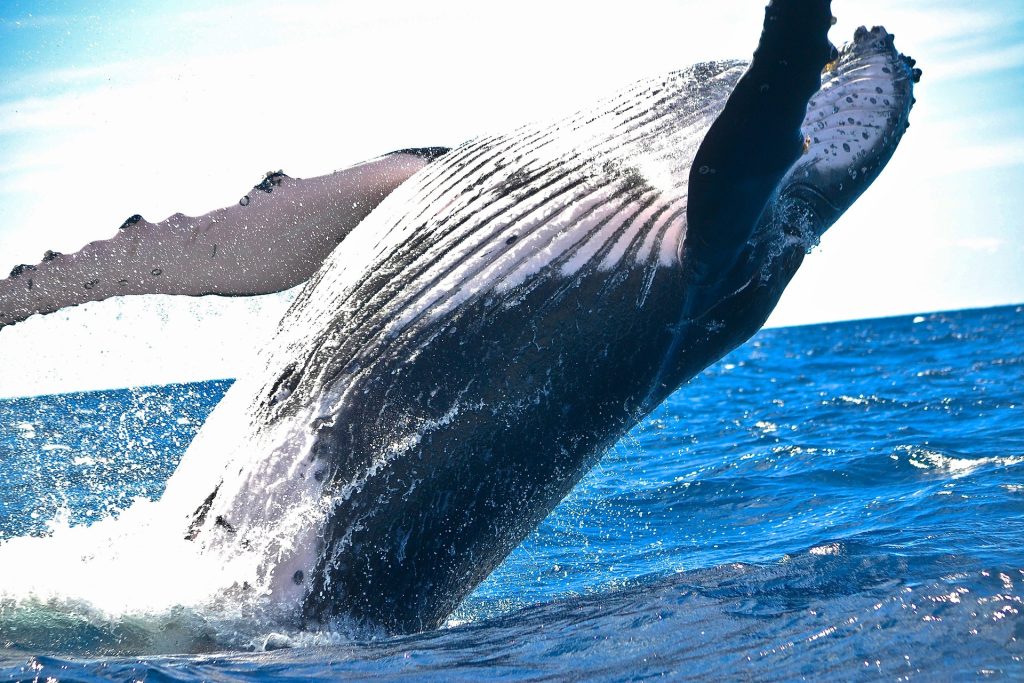
Every year from May to November, humpback whales migrate up and down the Queensland coastline as part of one of the most amazing wildlife journeys on Earth. It’s thought that more than 20,000 whales travel between Antarctica and the Great Barrier Reef, meaning this seasonal event provides a powerful, real-world STEM learning opportunity for primary classrooms in Australia.
Ocean Life Education provides curriculum-aligned marine science incursions, excursions and events, online programs, and classroom toolkits designed to assist teachers turn humpback whale migration into engaging inquiry-based learning.
Scroll to the bottom of this blog to DOWNLOAD YOUR FREE HUMPBACK WHALE TEACHING TOOLKIT 👇👇👇
🌊 Humpback Whale Classroom Activities for Primary Students
Humpback whales have to be one of the most effective real-world teaching examples in Australian primary education because the migration happens right here on our coastline and because the topic connects directly to key curriculum areas including science, geography, and sustainability.
Humpbacks support learning in:
- Biological sciences including life cycles and adaptations
- Geography including migration routes and marine environments
- Environmental science and sustainability
- Data collection and STEM inquiry learning
Humpback whales migrate up to 10,000 kilometres each year, moving between cool Antarctic feeding grounds and Queensland’s warm breeding waters, making them a remarkable and visible example of animal journeys and seasonal change.
🐋 Key Humpback Whale Facts for Students
- Humpback whales migrate between Antarctica and Queensland annually
- Migration distance can exceed 10,000 kilometres
- They travel along Australia’s east coast between May and November
- Calves are born in warm tropical waters for protection
- They use complex vocalisations known as whale song
- Populations are recovering after historic whaling pressures
Humpback Whale Teachers Toolkit
To support Quensland teachers, Ocean Life Education has created a FREE Humpback Whale Teachers Toolkit
designed for primary classrooms.
🐋 STEM Activities: Whale Migration & Adaptations
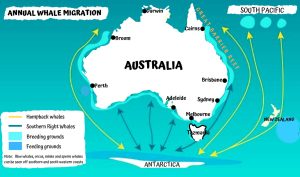
🗺️ Migration Mapping Task
Students map the humpback migration route along Australia’s east coast and identify key breeding and feeding regions.
Skills: geography and environmental systems
📊 Migration Data Recording Sheet
Students record:
- Whale sightings
- Dates
- Behaviour observations
- Location tracking
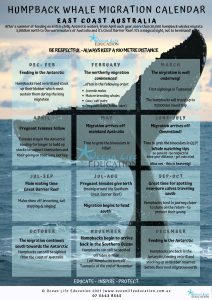 ✍️ Whale Migration Diary Writing
Students write from the perspective of a migrating humpback whale.
Prompts:
What do you pass/ see along the Queensland coastline?
What challenges do you face during migration?
Why is Queensland important for your journey?
Persuasive writing (marine protection themes)
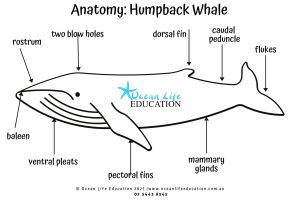 🧬 Adaptation Investigation Stations
Students explore:
- Blubber for insulation
- Baleen feeding systems
- Tail fluke propulsion
- Breathing via blowholes
- Comparisons with other marine animals
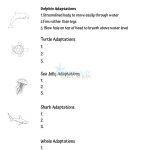 🐋 Marine Animal Adaptations Worksheet
Complete the lists to compare a diverse range of ocean animals. Click here to download resource.
🧠 Humpback Whale Fact Quiz
Short classroom quiz covering:
- Migration distance
- Feeding behaviour
- Breeding grounds
- Whale communication
🌏 Curriculum Alignment (Australia)
This resource supports:
- Year 3–6 Science: Biological sciences (adaptations, ecosystems, life cycles)
- Year 4–6 Geography: environmental change and natural systems
- General capabilities: critical thinking, sustainability, data literacy
🌊 Real-World STEM Learning in 2026
Marine education is shifting toward hands-on, inquiry-based learning supported by real-world environmental data. Humpback whales provide a perfect example of this approach because students can connect classroom learning to seasonal migration events occurring off the Queensland coast each year.
🐳 Extend Learning with Ocean Life Education
Ocean Life Education provides:
- Hands on curriculum-aligned marine science programs
- Classroom-ready STEM resources
- Online whale and shark courses
- School incursions, excursions and interactive displays

Book a Primary Ocean Science Incursion for Your School
Ocean Life Education provides engaging marine education incursions for Queensland schools, giving students unforgettable hands-on experiences with marine life.
Humpback Whale Teachers Toolkit
Thank you for reading: Humpback Facts for Queensland Schools (2026) | Free STEM Toolkit
Author: Hayley Gee, Marine Educator, Ocean Life Education