



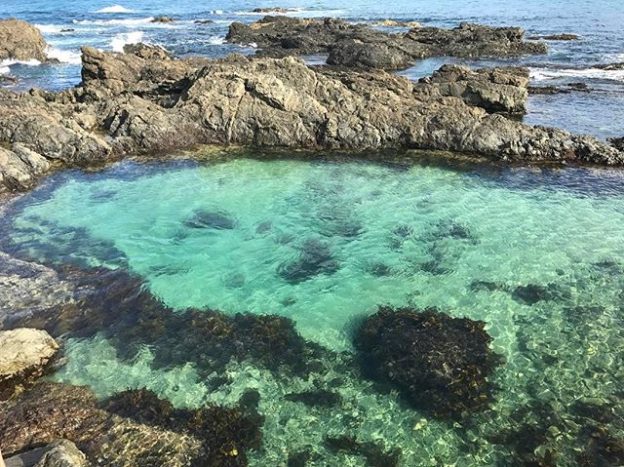
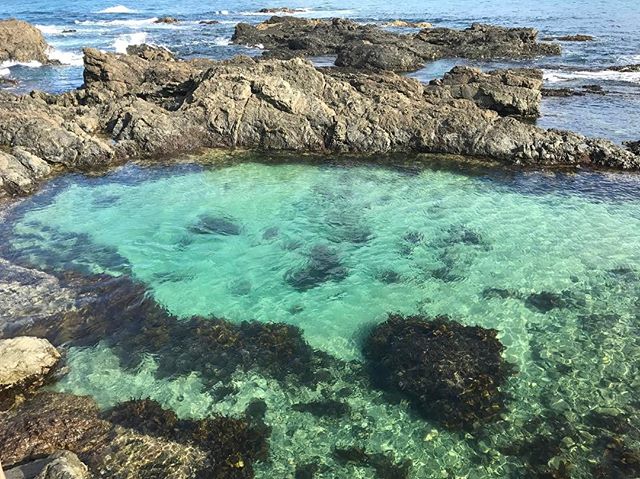
Queensland’s coastline is home to some of the best rock pool habitats in Australia. These shallow pockets of water form between the rocks at low tide and create the perfect real‑world setting for students to investigate Queensland rock pool animals and how living things survive in particular environments. For Year 5 teachers, rock pools offer an ideal way to explore adaptations, habitats, and science inquiry skills – all while connecting learning to the local environment.
Discover our live marine education incursions Queensland here.
Download your FREE printable activity at the foot of this blog: Rock Pool Adaptations – Science Activity
What Are Rock Pools?
Rock pools are natural mini‑ecosystems found along our rocky shores. When the tide goes out, water becomes trapped in 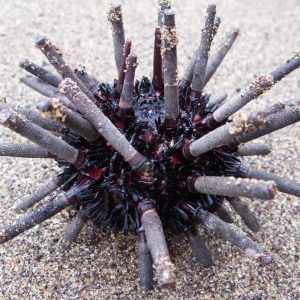 cracks and hollows, creating a temporary intertidal zone home for a variety of marine animals. These habitats can be harsh: temperatures change quickly, waves crash over the rocks, and water levels rise and fall throughout the day. Only animals with clever intertidal zone adaptations can survive here. Ocean Life Education offer the opportunity to examine some of these creatures during our live marine animal incursions, excursions and interactive marine display events. Link to our programs.
Discover where to find the best rock pools on the Sunny Coast of Queensland.
Common Rock Pool Animals in Queensland
Here are some of the species students may spot along the Sunshine Coast, Gold Coast, and other Queensland beaches:
- Sea stars
- Sea cucumbers
- Hermit crabs
- Sea urchins
- Anemones
- Small fish
- Snails and limpets
- Barnacles
Check out the Sunshine Coast Council Rock Pool Guide here.
These animals each have unique features that help them cope with changing tides, predators, and the physical challenges of living in a rock pool. Check out the features of the marine animals we bring to you here.
Key Adaptations That Help Rock Pool Animals Survive 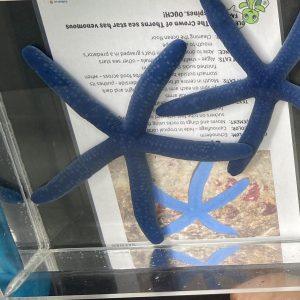
Rock pool animals use a mix of structural and behavioural adaptations to survive:
- Strong suction feet (sea stars & limpets) – help them cling tightly to rocks during waves
- Hard shells (snails, hermit crabs) – protect soft bodies from predators and rough conditions.
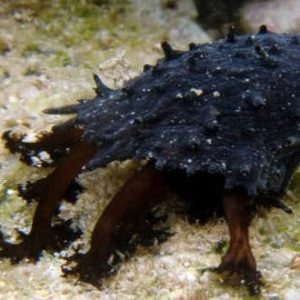
- Flexible bodies (sea cucumbers) – allow them to squeeze into tight spaces for safety.
- Stinging tentacles (anemones) – help catch food and deter predators.
- Spiky bodies (sea urchins) – help them move around and find food and deter predators.
- Ability to tolerate temperature changes – essential for animals exposed to sun and warm water at low tide.
- Hiding behaviour – many species shelter under rocks or in crevices to avoid drying out.
These adaptations make rock pools a perfect habitat for investigating how living things survive in particular environments, a key concept in Year 4 biological sciences.
Safe Rock Pool Exploration Tips 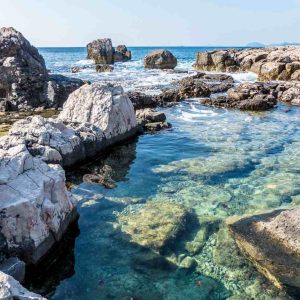
Encourage students and families to explore rock pools safely and responsibly:
- Walk slowly and watch your step – rocks can be slippery.
- Look, don’t touch – many animals are fragile or protected.
- Avoid lifting rocks – this can disturb hidden animals.
- Observe from the edges – waves can be unpredictable.
- Leave everything as you found it.
Simple Year 5 Science Investigation
Teachers can use rock pools to support science inquiry skills:
Question: How do different rock pool animals survive in their environment?
Method: Observe animals, record features, identify possible adaptations.
Data: Draw or list structural features (shells, feet, tentacles).
Conclusion: Explain how these features help the animal survive.
This investigation links directly to Ocean Life Education’s Adaptations Incursions, reinforcing classroom learning with real‑world examples.
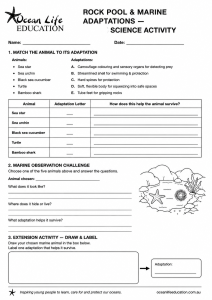 Download your printable one‑page activity here: Rock Pool Adaptations – Year 5 Science Activity
 Bring Marine Science to Life
Ocean Life Education delivers interactive, curriculum‑aligned incursions that bring live marine animals into Queensland classrooms. Students explore adaptations, marine food webs, ocean conservation and the incredible diversity of Australia’s coastal ecosystems – all through hands‑on learning that inspires curiosity and supports Science, Geography and Sustainability. Find out more about our live marine education incursions and how we can bring the wonders of the ocean to your classroom.
Book a Primary Ocean Science Incursion for Your School
Thank you for reading: Rock Pool Animals: Queensland’s Coastal Habitat and Their Amazing Adaptations
Author: Hayley Gee, Marine Education Officer, Ocean Life Education