



Teaching Year 4 Science and looking for an engaging way to explore producers, consumers, decomposers and food chains? Australia’s marine habitats provide a fascinating real-world context for introducing these important Biological Sciences concepts.
From sea turtles and sea urchins to sea stars, black sea cucumbers and sharks, Australia’s oceans are home to an incredible diversity of animals, each with a role within its habitat.
At Ocean Life Education, we love using real marine animals to help students understand that the ocean is not simply a place where animals live. It is a complex, interconnected habitat where living things depend on one another and interact with their environment.
This makes Australian marine habitats an excellent context for teaching Year 4 Science, particularly the Australian Curriculum content description AC9S4U01.
Download FREE activity here – Year 4 Producers, Consumers, Decomposers and Food Chains
Year 4 Science: Exploring relationships within a habitat 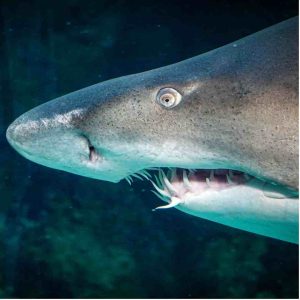
Under AC9S4U01, Year 4 students investigate:
The roles and interactions of consumers, producers and decomposers within a habitat and how food chains represent feeding relationships.
The curriculum encourages students to explore how animals obtain food, categorise organisms according to their roles and represent feeding relationships using food chains.
Rather than teaching these concepts only through diagrams and definitions, a marine habitat gives students something meaningful to investigate.
Who produces food? Who eats whom? What happens when an animal dies? And how are all these organisms connected?
These are questions that can bring biological science to life.
What is a marine habitat?
Start by asking your students:
What is a habitat?
A habitat is the natural environment where an organism lives and finds the resources it needs to survive. 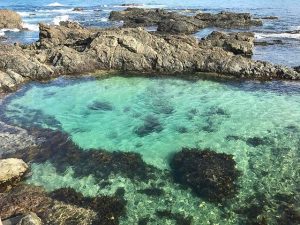
Australia has an enormous variety of marine habitats, including:
- rocky shores and rock pools
- coral reefs
- seagrass meadows
- mangrove environments
- sandy seabeds
- estuaries
- the open ocean
Each habitat provides different conditions, food and shelter, and supports different communities of organisms.
For Year 4 students, it’s useful to emphasise that a habitat isn’t just a place. It is a system of living and non-living things that interact.
Producers: where marine food chains begin
One of the first concepts to introduce is the producer.
Producers are living things that make their own food, usually using energy from sunlight.
In Australian marine habitats, producers include:
- seagrasses
- seaweed and algae
- phytoplankton
These organisms are fundamental to marine ecosystems because they provide the starting point for many food chains.
For example, a green sea turtle can feed on seagrass and algae.
A simplified food chain could be:
☀️ Sun → 🌿 Seagrass → 🐢 Sea turtle
This gives students a straightforward way to understand the relationship between a producer and a consumer.
Try asking your class:
“Where did the sea turtle’s food originally get its energy?” 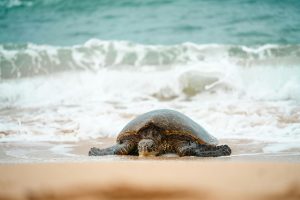
This can lead students back to the role of sunlight and producers.
Consumers: the animals that eat other organisms
Consumers cannot make their own food. Instead, they obtain energy by eating other living things.
Australian marine habitats contain many different types of consumers, and this is where students can begin exploring the incredible diversity of feeding relationships in the ocean.
🐢 Sea turtles
Sea turtles have different diets depending on their species and life stage. Green sea turtles, for example, can feed on seagrass and algae.
This makes them a useful example when teaching students about the relationship between a producer and consumer.
Seagrass → sea turtle
Sea urchins
Sea urchins are also consumers. Many species graze on algae and other plant material.
A simplified food chain could therefore be:
Algae → sea urchin
This is another example of a consumer obtaining food from a producer. 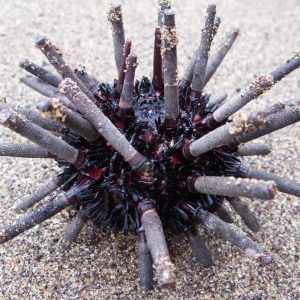
⭐ Sea stars
Sea stars provide an opportunity to show students that consumers don’t all eat plants or algae.
Many sea stars are predators or scavengers and feed on other marine organisms or organic material.
This can lead to an important classroom discussion:
“Do all consumers eat the same type of food?”
Of course not.
Consumers can occupy different positions within a food chain and have very different feeding strategies.
🦈 Sharks
Sharks are consumers and many species are important marine predators. 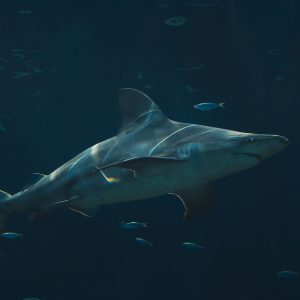
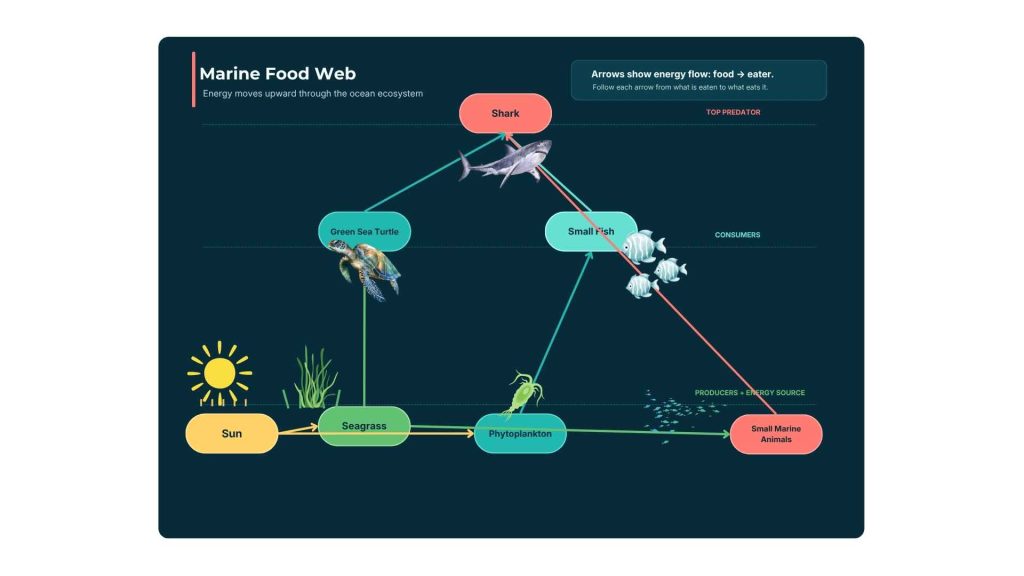
A simplified food chain could show how a shark can be connected to a producer even when it doesn’t eat the producer directly:
Phytoplankton → small marine animals → fish → shark
This helps students understand that energy and food can pass through several organisms within a food chain.
Black sea cucumbers: consumers with an important role
Black sea cucumbers are particularly interesting when teaching students about marine habitats.
Rather than actively hunting prey like many predators, black sea cucumbers feed on organic material within sediments on the seafloor.
As they process material, they contribute to nutrient cycling within their environment.
They are a great example for demonstrating that being a consumer doesn’t necessarily mean being a predator.
Many of these animals can be observed during our incursions and interactive events.
Ask your students:
“If a marine animal doesn’t hunt another animal, can it still be a consumer?”
This provides an excellent opportunity to challenge the common misconception that all consumers are predators.
Decomposers: nature’s recyclers
Now comes another important part of the food system: decomposers.
Decomposers such as bacteria and fungi break down dead organic material.
Imagine a sea turtle, sea star or sea urchin dying.
Its remains don’t simply disappear.
Decomposers break down the dead organic material and help return nutrients to the environment.
A simplified way to demonstrate this process is:
Producers → Consumers → Dead organic material → Decomposers → Nutrients → Producers
This shows students that decomposers have an essential role within a habitat.
They help recycle nutrients, which can then become available to producers again.
Food chains show feeding relationships
Once students understand producers, consumers and decomposers, introduce the concept of a food chain. 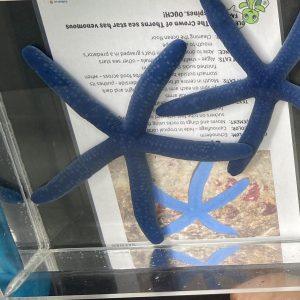
A food chain represents feeding relationships between organisms.
For example:
☀️ Sun → algae → sea urchin → sea star
In this example:
- algae = producer
- sea urchin = consumer
- sea star = consumer
Another simple example is:
☀️ Sun → seagrass → 🐢 sea turtle
And:
☀️ Sun → phytoplankton → small marine animal → fish → 🦈 shark
Explain to students that the arrows represent the feeding relationship and show the direction in which food and energy move through the chain.
One habitat can contain many food chains
This is where the concept gets really interesting.
A real marine habitat isn’t made up of just one food chain.
A sea urchin may feed on algae. A sea turtle may feed on seagrass. A sea star may eat another marine animal. Fish may eat smaller organisms, while sharks may feed on a range of animals.
These different food chains can overlap and connect to create a food web.
For Year 4 students, this is a useful way to introduce the idea that organisms are interdependent.
A change to one organism or food source can have consequences for other organisms within the habitat.
A Year 4 investigation: What happens if one organism disappears?
Try giving students a hypothetical scenario:
Imagine there is suddenly much less algae available in a marine habitat. What might happen?
Students could reason through the possible effects:
Less algae → less food for some sea urchins → fewer sea urchins → less food for animals that eat them
This activity encourages students to think beyond simply memorising the terms producer, consumer and decomposer.
They are beginning to understand the relationships between organisms within a habitat.
Classroom activity: Build an Australian marine food chain
To reinforce the lesson, we’ve created a free printable activity sheet for Year 4 students.
Students can use familiar marine examples including: 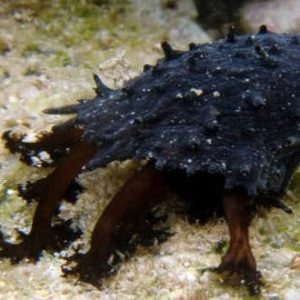
- algae
- seagrass
- sea turtles
- sea urchins
- sea stars
- black sea cucumbers
- sharks
- marine bacteria
Many of these creatures can be observed and examined during our programs. Although please note that we have fresh water turtles rather than marine turtles!
The activity asks students to:
- Classify organisms
Identify producers, consumers and decomposers. - Build food chains
Arrange organisms to demonstrate feeding relationships. - Explain the relationships
Identify which organisms provide food for others. - Explore decomposers
Explain why decomposers are important within a habitat. - Think critically
Consider what could happen if a food source became less available. - Create a food web
Connect several feeding relationships within a marine habitat.
Download FREE activity here – Year 4 Producers, Consumers, Decomposers and Food Chains
Take Year 4 Science beyond the classroom
At Ocean Life Education, we believe some of the best science learning happens when students can see, experience and interact with the subject they’re studying.
Our Habitats incursion provides a hands-on way for students to explore marine habitats and discover how animals are connected to the environments in which they live.
Meeting real marine animals can make concepts such as habitat, consumer, food chain and relationships much more concrete.
Students can observe and discuss animals such as sea stars, sea cucumbers and sea urchins, while learning about their habitats, adaptations and roles within marine ecosystems.
For teachers, this provides an opportunity to connect curriculum learning with a memorable, real-world experience.
Connect your AC9S4U01 lesson to a marine animals incursion
If you’re teaching Year 4 Biological Sciences, an Ocean Life Education Habitats incursion can provide a valuable extension to classroom learning. In fact, our incursions include many of the animals mentioned above.
Before the incursion, students could investigate:
What is a habitat?
What is a producer?
What is a consumer?
What is a decomposer?
What is a food chain?
During the incursion, students can observe real marine animals and ask:
Where does this animal live?
What does it eat?
Is it a producer, consumer or decomposer?
What other organisms does it interact with?
Where might it fit within a food chain?
Bring Australia’s marine habitats into your Year 4 classroom
Australia’s marine environments offer an engaging and relevant way to teach students about producers, consumers, decomposers, feeding relationships and food chains.
From a tiny marine producer to a sea urchin grazing on algae, a sea star feeding on other organisms, a black sea cucumber processing organic material on the seafloor or a shark acting as a predator, every organism provides an opportunity to explore the connections that make marine habitats work.
 Want to bring these concepts to life?
Explore Ocean Life Education’s Habitats incursion and give your Year 4 students the opportunity to connect their classroom learning with real Australian marine animals and habitats.
Curriculum link: Australian Curriculum Year 4 Science – AC9S4U01
Book a Primary Ocean Science Incursion for Your School
Thank you for reading: Australia’s Marine Habitats: A Year 4 Teacher Guide to Producers, Consumers, Decomposers and Food Chains
Author: Hayley Gee, Marine Education Officer, Ocean Life Education