





How do Australian marine animals survive?
From sharks patrolling the Great Barrier Reef to sea turtles swimming along Queensland’s coastline, Australia’s oceans are home to an incredible variety of marine animals. Each has special features and behaviours that help it find food, avoid predators and survive in its environment.
These features and behaviours are called adaptations. Understanding marine animal adaptations helps students investigate how living things are suited to their habitats and what happens when those environments change.
For Year 6 students, comparing structural and behavioural adaptations provides an opportunity to explore animal classification, survival and the relationships between organisms and their environments.
Download our FREE Yr 6 Adapatations Activity Worksheet (PDF)
What are structural and behavioural adaptations?
 Structural adaptations are physical features of an animal’s body. Examples include a shark’s teeth and fins, a sea turtle’s flippers and an octopus’s colour-changing skin.
Behavioural adaptations are actions that help animals survive. These include migration, hiding from predators, hunting and seeking shelter.
Many animals use a combination of both. Let’s explore six examples from Queensland and Australia’s marine environments.
Six fascinating marine animal adaptations
1. Sharks: Built for underwater survival
Sharks have streamlined bodies, fins and gills that help them move through water and breathe. Their specialised senses help them locate prey.
Queensland case study: The epaulette shark lives in shallow reef habitats in northern Queensland. Its fins help it move across the seabed, including through shallow areas where other sharks may struggle.
Children can examine an epaulette shark during our incursions and interactive displays.
2. Sea turtles: Life in the ocean
 Sea turtles have powerful flippers for swimming, streamlined bodies and specialised salt glands that remove excess salt. Different species have different diets and feeding adaptations.
Queensland case study: Green turtles feed on seagrass and algae in Queensland waters. Their specialised jaws help them crop this vegetation, making healthy seagrass meadows important to their survival.
Children can meet and examine a fresh water turtle during our incursions and interactive displays.
3. Octopuses: Masters of disguise
Octopuses have eight arms with suckers, flexible bodies and specialised skin cells that allow many species to change colour and patterns. These features help them explore crevices, handle prey and camouflage themselves.
Queensland case study: Reef octopuses can use camouflage and shelter among reef structures to avoid detection and catch food.
4. Sea stars: Life on the seafloor
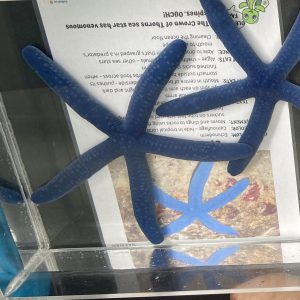 Sea stars are marine invertebrates, not fish. Many have tube feet that help them grip surfaces and move. Some species can even extend their stomachs to begin digesting prey outside their bodies.
Queensland case study: Sea stars found on Queensland’s reefs and rocky shores demonstrate how body structures support movement, feeding and survival on the seafloor.
Children can meet and examine sea stars during our incursions and interactive displays.
5. Humpback whales: Ocean travellers
Humpback whales have streamlined bodies, powerful tail flukes and a layer of insulating blubber. They breathe air through blowholes and must surface regularly.
Queensland case study: Humpback whales migrate along Australia’s east coast between feeding and breeding areas. Their seasonal migration is a behavioural adaptation that helps them use different habitats throughout the year.
6. Mangrove animals: Adapting to the tides
Mangrove habitats provide food and shelter, but animals must cope with muddy surfaces, changing tides and fluctuating conditions.
Queensland case study: Mud crabs use their claws for feeding and defence, while their walking legs help them move through muddy habitats. Fiddler crabs feed on organic material in sediment and shelter in burrows.
These examples show how animals combine physical features and behaviours to meet the challenges of their environments.
Why do adaptations matter?
Adaptations are closely connected to habitat. When habitats change, animals may lose access to food, shelter or breeding areas.
For example, clearing mangroves removes important habitat for crabs and juvenile fish. Damage to seagrass meadows can affect green turtles, while changes to reef environments may threaten animals that depend on them.
Studying animal adaptations for primary school helps students understand why biodiversity and healthy marine ecosystems matter.
Free Year 6 classroom activity
Bring the topic to life with our Marine Animal Adaptations worksheet. This black-and-white printable activity invites students to:
- Match marine animals to their adaptations.
- Classify features as structural or behavioural.
- Compare how two animals survive in different habitats.
- Predict how habitat changes could affect survival.
Download our FREE Yr 6 Adapatations Activity Worksheet (PDF)
Curriculum connection: Year 6 Science
This topic supports the Australian Curriculum v9.0, particularly AC9S6U01, which explores how physical habitat conditions affect the growth and survival of living things.
Students can compare observable animal features, discuss classification and use evidence to explain how adaptations support survival.
Explore the Australian Curriculum: Science for curriculum information.

Explore marine science with Ocean Life Education
Ocean Life Education delivers engaging, curriculum-aligned marine education programs for Queensland schools. Through interactive learning experiences with live marine animals, students can explore biodiversity, classification, adaptations and the importance of protecting ocean habitats.
The Adaptations & Classification program helps students investigate how marine animals differ and how their characteristics support survival.
Discover the Ocean Life Education Primary School Programs and bring marine science to life in your classroom.
Book a Primary Ocean Science Incursion for Your School
Thank you for reading: Marine Animal Adaptations: How Australian Ocean Animals Survive | Year 6 Science
Author: Hayley Gee, Marine Education Officer, Ocean Life Education