


Celebrate Shark Awareness Month with a surprising science lesson
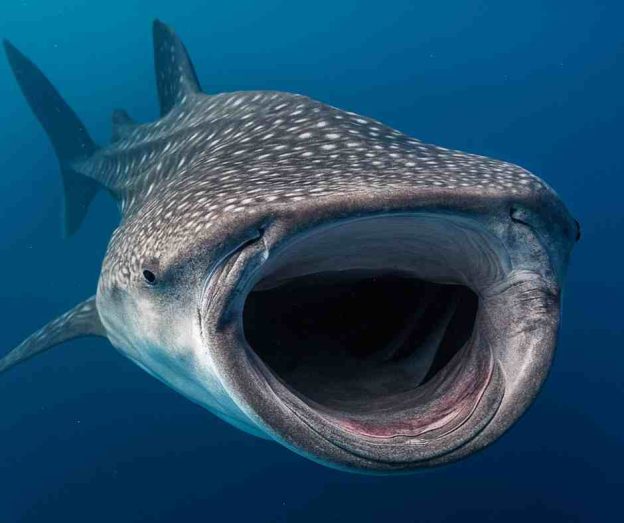
When students imagine the biggest animals in the ocean, they often picture fierce predators with enormous teeth. So they’re usually amazed to discover that the largest shark in the world – and even the biggest whales – feed on some of the smallest creatures in the ocean. So, why do sharks eat plankton
Download your free Shark Awareness Month classroom activity sheet at foot of article
It sounds impossible. Why would a 12-metre whale shark or a 30-metre humpback whale spend its day eating animals no bigger than your fingernail?
This fascinating question is the perfect way to spark curiosity during Shark Awareness Month (July) and Shark Awareness Day, while exploring food chains, adaptations and marine ecosystems.
Meet Queensland’s Gentle Giants
Queensland waters are home to some incredible marine animals, including species that rely on tiny marine life to survive.
🦈 Whale Shark
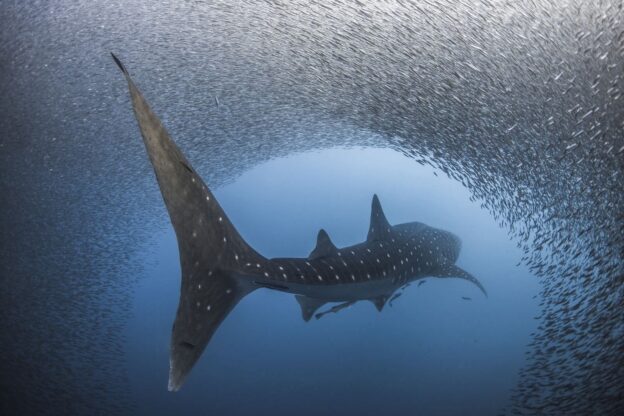
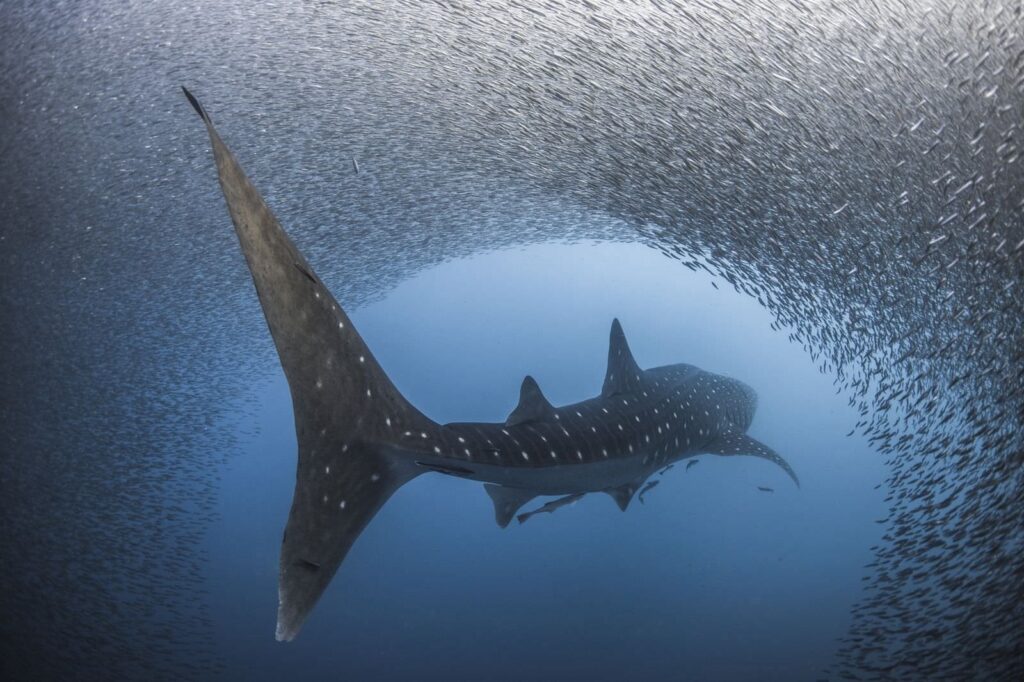
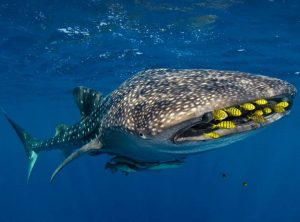
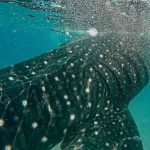
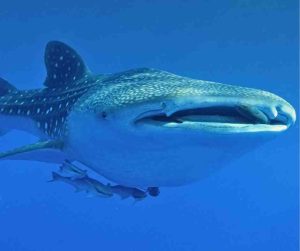 Despite being the largest fish on Earth, whale sharks feed almost entirely on plankton, tiny fish eggs and small schooling fish.
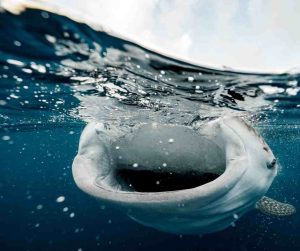
Instead of chasing large prey, they simply swim slowly through the water with their enormous mouths open, filtering thousands of litres of seawater every hour.
Although whale sharks are occasional visitors to South East Queensland, they are more commonly seen around the Great Barrier Reef and Ningaloo Reef.
🐋 Humpback Whale
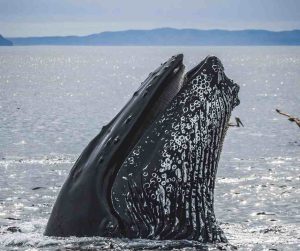 Every winter, thousands of humpback whales migrate along the Queensland coast, passing places like Noosa, Mooloolaba and the Sunshine Coast.
These enormous mammals also feed on surprisingly small animals – mainly krill and other tiny crustaceans during their time in Antarctic waters before migrating north to breed.
Their baleen plates act like giant sieves, allowing them to trap huge amounts of food while letting seawater escape.
So…Why Eat Tiny Animals?
The answer is simple:
There are billions of them!
Tiny marine organisms like plankton and krill are among the most abundant living things on Earth.
Instead of hunting one large meal, whale sharks and baleen whales efficiently collect thousands – or even millions – of tiny animals in every mouthful.
Scientists call this filter feeding.
It is one of the most efficient feeding strategies in the ocean.
What Exactly Is Plankton?
Many students think plankton is just one type of animal.
In fact, plankton describes any tiny organism that drifts with ocean currents.
Some plankton are microscopic plants called phytoplankton, while others are tiny animals known as zooplankton.
These organisms form the foundation of almost every marine food chain.
Without plankton, there would be no fish, whales or sharks.
Amazing Ocean Adaptations
Filter-feeding animals have evolved remarkable adaptations.
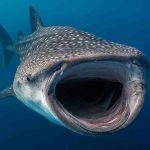 Whale Sharks
- Huge mouths over one metre wide
- Tiny teeth that are rarely used
- Special filtering pads that trap food
- Gentle swimming behaviour
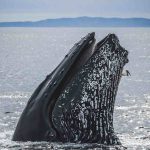 Baleen Whales
- No teeth
- Hundreds of baleen plates made from keratin
- Powerful tongues
- Huge expandable throats for gulp feeding
These adaptations help them collect enormous amounts of food while using very little energy.
Queensland Connection
Did you know?
Each winter, South East Queensland becomes one of Australia’s best places to observe humpback whales during their annual migration.
Students may even spot whales from:
- Noosa National Park
- Point Lookout (North Stradbroke Island)
- Cape Moreton
- Mooloolaba coastline
- Coolum and Peregian beaches
This makes Shark Awareness Month the perfect time to compare two of the ocean’s most impressive filter feeders – the whale shark and the humpback whale.
Where can Australian Students See Whale Sharks?
Include information such as:
- Ningaloo Reef (WA) hosts the world’s best-known seasonal whale shark aggregation.
- Whale sharks are occasionally seen in Queensland waters.
Classroom Activities (Years 7–9) – See Activity Handout Below
1. Bigger Isn’t Always Scarier
Show students pictures of:
- Great White Shark
- Whale Shark
- Humpback Whale
Ask:
Which one do you think eats the biggest prey?
Students are often surprised by the answer.
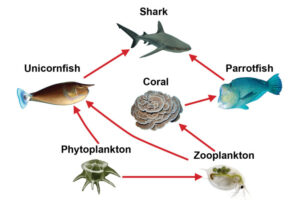 2. Build a Marine Food Chain
Challenge students to create a food web beginning with:
Sunlight → Phytoplankton → Zooplankton → Small Fish → Larger Fish → Sharks
Then compare it with:
Sunlight → Phytoplankton → Zooplankton → Whale Shark
or
Sunlight → Phytoplankton → Krill → Humpback Whale
Discuss how different species occupy different roles within marine ecosystems.
 3. Design a Filter Feeder
Ask students to invent their own giant marine animal.
They should decide:
- How does it collect food?
- What adaptations does it need?
- Where does it live?
- What does it eat?
- How does it survive?
Students can label their design and explain how their adaptations help them feed efficiently.
4. STEM Challenge: Can You Filter Like a Whale?
Using everyday classroom materials, students design and test a simple filter that separates different-sized particles from water.
Encourage them to investigate:
- Which materials worked best?
- What particle sizes were captured?
- How is this similar to baleen or a whale shark’s filtering system?
This hands-on investigation introduces engineering design, observation and scientific inquiry.
Check out our other whale resources here.
Why Sharks Matter
Shark Awareness Month is about much more than changing people’s perceptions of sharks.
It is an opportunity to help students understand that sharks perform many different ecological roles.
While some species are top predators, others – like the whale shark – are gentle filter feeders that depend on healthy plankton populations and balanced marine ecosystems.
Protecting sharks helps protect the entire ocean. Check out our other shark resources here.
Australian Curriculum Links
This topic supports learning across Years 7–9, including:
- Science: Ecosystems, adaptations, food webs and biodiversity.
- Science Inquiry: Questioning, predicting, investigating and analysing evidence.
- Design and Technologies: Designing and testing filter-feeding models.
- Sustainability Cross-Curriculum Priority: Understanding healthy marine ecosystems and biodiversity conservation.

Bring Marine Science to Life
Want your students to experience marine science firsthand?
Ocean Life Education’s interactive incursions bring live marine animals into Queensland schools, helping students explore shark adaptations, marine food webs, ocean conservation and the incredible diversity of Australia’s coastal ecosystems.
Our curriculum-aligned programs inspire curiosity while supporting learning across Science, Geography and Sustainability.
Find out more about our live marine education incursions and discover how we can bring the wonders of the ocean to your classroom.
Book a Primary Ocean Science Incursion for Your School
Download your free Shark Awareness Month classroom activity sheet here
Thank you for reading: Why Do the Biggest Sharks Eat Tiny Animals?
Author: Hayley Gee, Marine Educator, Ocean Life Education